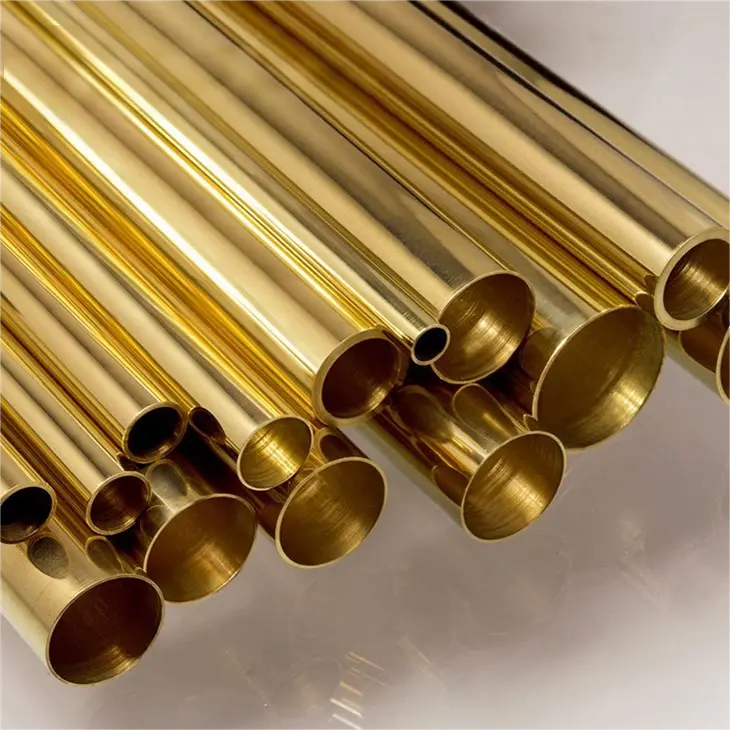
China has become one of the world’s largest manufacturing and export centers for copper products, supplying copper tubes, copper pipes, copper sheets, copper rods, and other copper materials to customers across the globe. With growing international demand from industries such as HVAC, refrigeration, renewable energy, construction, and electrical engineering, more overseas buyers are sourcing copper products from Chinese manufacturers.
However, choosing the right copper tube supplier is not simply about finding the lowest price. Product quality, production capability, export experience, and supply stability all play critical roles in ensuring successful long-term cooperation.
This article outlines the key factors international buyers should consider when selecting a reliable copper tube supplier in China.
Why Global Buyers Source Copper Tubes from China
Chinese copper manufacturers have developed strong advantages over the past two decades through continuous investment in equipment, production technology, and international trade capabilities.
Major advantages include:
- Competitive manufacturing costs
- Large-scale production capacity
- Comprehensive copper product categories
- Mature export logistics systems
- Flexible customization capabilities
- Fast production lead times
Today, Chinese suppliers export copper products to Europe, North America, Southeast Asia, the Middle East, South America, and Africa.
Product Quality Should Always Come First
When purchasing industrial copper tubes, quality consistency is one of the most important considerations.
Reliable suppliers should provide products that comply with international standards such as:
- ASTM standards
- EN standards
- JIS standards
- GB standards
Buyers should also verify:
- Material composition
- Dimensional tolerances
- Surface quality
- Mechanical properties
- Pressure resistance
- Conductivity performance
A professional supplier should be able to provide material test certificates and inspection reports upon request.
For applications such as HVAC systems, refrigeration equipment, and medical gas pipelines, stable product quality is essential for operational safety and long-term performance.
Evaluate Manufacturing Capability
A strong manufacturing facility usually indicates better production consistency and delivery reliability.
Before establishing cooperation, buyers should evaluate whether the supplier has:
- Advanced production equipment
- Automatic production lines
- Precision inspection instruments
- Sufficient factory scale
- Experienced technical teams
- Quality management systems
Suppliers with modern production technology are generally better equipped to handle customized specifications and large-volume orders.
For example, seamless copper tube production requires precise control over dimensions, wall thickness, and surface treatment processes. Manufacturers with mature production expertise can significantly reduce quality risks.
Check Export Experience
Exporting industrial materials involves much more than manufacturing products.
An experienced exporter should understand:
- International packaging requirements
- Shipping documentation
- Customs procedures
- Container loading optimization
- International trade regulations
- Freight coordination
Suppliers with strong export experience can help buyers avoid delays, documentation errors, and transportation damage.
This is particularly important for overseas customers purchasing large quantities of copper tubes or long-length copper coils for industrial projects.
Stable Raw Material Supply Matters
Copper prices can fluctuate significantly in the global commodities market. Reliable manufacturers typically maintain stable raw material procurement channels to ensure production continuity and pricing stability.
Buyers should work with suppliers capable of:
- Maintaining long-term raw material partnerships
- Managing inventory efficiently
- Providing stable delivery schedules
- Responding quickly to urgent orders
Supply chain stability has become increasingly important in recent years due to global logistics disruptions and rising demand for industrial metals.
Customization Capability Is a Major Advantage
Different industries require different copper tube specifications.
Professional suppliers should support customized production including:
- Outer diameter customization
- Wall thickness adjustment
- Length cutting services
- Coil packaging
- Surface treatment
- Special alloy requirements
Industries such as air conditioning, refrigeration, renewable energy, and industrial manufacturing often require non-standard sizes or special technical specifications.
Flexible customization capability can help buyers improve production efficiency and reduce secondary processing costs.
Quality Control and Inspection Procedures
Strict quality control systems are essential for ensuring product reliability.
Professional copper tube manufacturers typically perform inspections covering:
- Chemical composition analysis
- Tensile strength testing
- Hardness testing
- Eddy current testing
- Air tightness testing
- Surface inspection
- Dimensional measurement
Comprehensive testing procedures help minimize defects and improve consistency across production batches.
For large engineering projects, reliable quality control can significantly reduce operational risks and maintenance costs.
Communication and Service Efficiency
Efficient communication is often overlooked but extremely important in international trade.
A professional supplier should provide:
- Fast response times
- Clear technical communication
- Accurate quotations
- Timely order updates
- Reliable after-sales support
Strong communication can greatly improve cooperation efficiency and help avoid misunderstandings during production and shipment processes.
Long-term business relationships are usually built on trust, transparency, and responsive service.
Sustainability and Environmental Responsibility
Many international buyers now pay close attention to environmental compliance and sustainable manufacturing practices.
Responsible copper manufacturers are increasingly investing in:
- Energy-efficient production equipment
- Recycling systems
- Waste reduction programs
- Environmental certifications
- Sustainable sourcing practices
As global industries move toward greener supply chains, environmentally responsible suppliers may gain stronger long-term competitiveness.
Industries Driving Global Copper Tube Demand
Demand for copper tubes continues to grow across numerous sectors, including:
HVAC and Refrigeration
Copper tubes are essential for refrigerant circulation and heat exchange systems.
Renewable Energy
Solar thermal systems, heat pumps, and energy storage facilities require high-conductivity copper materials.
Construction and Plumbing
Copper piping remains widely used for water supply and gas distribution systems.
Electrical Engineering
Copper’s excellent conductivity makes it ideal for electrical applications.
Automotive Industry
Electric vehicles and charging infrastructure require increasing quantities of copper components.
Industrial Manufacturing
Factories and processing facilities rely on copper tubes for cooling, heating, and fluid transportation systems.
Conclusion
Choosing the right copper tube supplier in China requires careful evaluation of product quality, manufacturing capability, export experience, quality control systems, and customer service.
While pricing is important, long-term reliability and stable cooperation often deliver greater value for industrial buyers. A professional copper supplier can help customers improve product performance, reduce operational risks, and maintain stable supply chains in an increasingly competitive global market.
As worldwide demand for copper products continues to grow, establishing partnerships with experienced and reliable manufacturers will become even more important for businesses across the HVAC, renewable energy, construction, and industrial sectors.